
Residential & Commercial Painting in Perth Amboy, NJ
Expert Interior & Exterior Painters for Home & Office

Exterior Painters in Perth Amboy & Central NJ
Free 24-Hour Estimates and a 2-Year Workmanship Warranty

When to Hire a Pro for Exterior Painting
Knowing What Good Looks Like
You can paint the outside of your house yourself, and plenty of homeowners start that way, especially on a small project like a front door or a section of fence. But once you’re standing in the driveway looking at two stories of faded siding, peeling trim, and wood that hasn’t been touched in twelve years, the math changes. A full exterior paint job on a residential home involves surface diagnostics, substrate-specific prep, product selection, weather timing, and application methods that take years of field experience to execute well. Most homeowners who research this topic land in the same place: they want to hire the right contractor and understand the work well enough to know what good looks like.
That’s what this page is for, and if you’ve already decided to bring in a professional, everything below will help you understand what a quality residential exterior paint job actually involves, how the process works from start to finish, what it costs in this part of New Jersey, and how to evaluate the contractors who show up to give you an estimate.


How a Typical Exterior Project Goes
From Inspection to Final Walkthrough
Every interior project follows the same five steps:
- 1. Free consultation and inspection. Ernil walks every elevation of your home, checking for moisture damage, wood rot, failed caulk, mildew, chalking paint, and any substrate conditions that need repair before painting. You'll get a detailed written estimate with line-item pricing and a clear timeline within 24 hours.
- 2. Surface prep. We pressure-wash at the correct PSI for each surface, scrape loose and failing paint, sand feathered edges, fill cracks and nail holes, replace rotted wood, re-caulk joints around windows and doors, and treat any mildew. Prep accounts for 60 to 70 percent of the total labor hours on a typical job.
- 3. Priming. We apply substrate-appropriate primers to bare wood, repaired areas, stain-prone surfaces, and any spots where the existing finish has failed. Primer choice depends on the surface, since shellac-based, bonding, and high-build primers all serve different purposes.
- 4. Painting. Two coats of Sherwin-Williams or Benjamin Moore exterior paint in the grade and sheen you picked, applied with brush, roller, or spray, depending on the surface. You'll get daily progress updates by text or phone while we work.
- 5. Final walkthrough. We walk the finished job with you before we call it done, and every project comes with our 2-year workmanship warranty, so if something isn't right later, we come back and fix it.
If you’re ready to get started, give us a call or request a free estimate online.
Why Exterior Painting Is a System, Not a Single Step
The biggest misconception homeowners have about exterior painting is that it’s mostly about the paint, but it’s not. The paint is the last 20 to 30 percent of the job, and what determines whether that paint holds up for three years or ten is everything that happens before it goes on.
A residential exterior is a system of different surfaces, each with its own material properties, exposure conditions, and failure patterns. Your home’s siding behaves differently than its trim, and the fascia boards under your gutters take more water contact than the siding panels on the same wall. A south-facing elevation in Middlesex County absorbs more UV than a north-facing one and will show wear first, and a wood deck sees foot traffic, standing water, and freeze-thaw cycling that a vertical wall surface never deals with.
A contractor who treats your entire house like one flat surface is cutting corners, and you’ll see the results within one to two years. Our approach is different: we treat each surface as its own job.
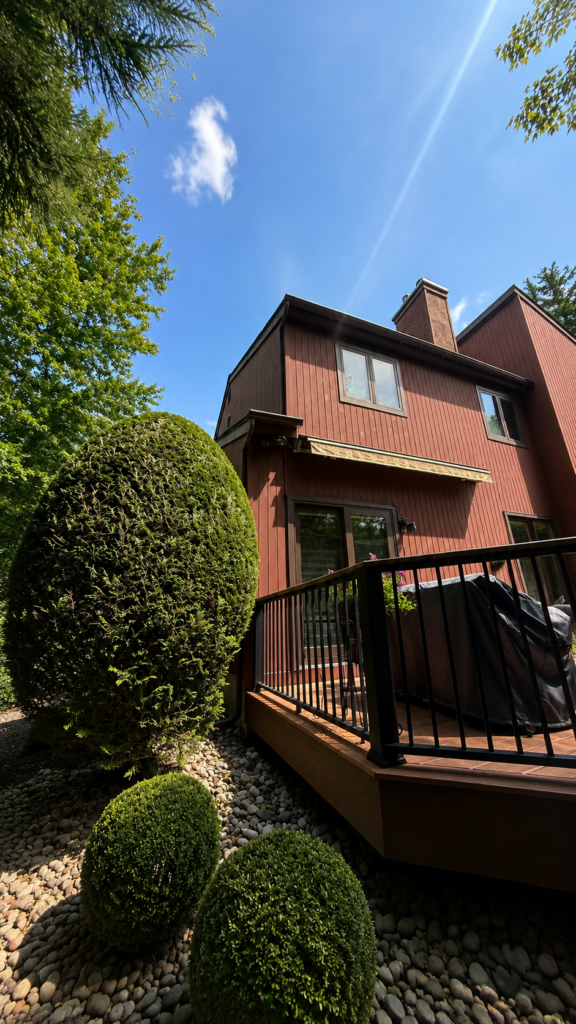
The Surfaces on a Residential Exterior
Every home has multiple surface types on the outside, and each one needs a different approach. Knowing what’s on your house helps you understand why a contractor’s quote is broken down the way it is and why a thorough inspection matters before any work starts.
Siding
Siding is the largest painted surface on most homes and the first thing people see from the street. Homes across Middlesex County have vinyl, wood clapboard, aluminum, stucco, brick, and fiber cement siding, sometimes more than one type on the same house, and each material has different prep, primer, and product needs. Exterior siding painting services handle each substrate correctly: wood siding needs moisture testing before primer goes on, aluminum siding needs a bonding primer to get paint to stick, and stucco has its own challenges around efflorescence and hairline crack repair.
Wood Surfaces Beyond Siding
Wood shows up in more places than just walls. Trim boards, fascia, window frames, porch railings, pergolas, and decorative millwork are all common wood elements on New Jersey homes. Exterior wood painting has to account for how wood expands and contracts with seasonal moisture changes, which means the paint film has to flex without cracking or it peels. The species matters too: cedar and redwood contain natural tannins that bleed through paint and leave brown stains if the primer system isn’t built to block them, and pressure-treated lumber on porches and decks behaves differently than the kiln-dried boards used for trim.
Decks
Decks take more abuse than any other surface on a home, including foot traffic, direct sunlight, pooling water after rain, and freeze-thaw cycles that force moisture into the wood grain every winter. The product choice on a deck is different than on siding: solid stains, semi-transparent stains, and deck paints all have different performance characteristics, maintenance schedules, and aesthetic trade-offs. A contractor who approaches your deck the same way they approach your siding walls is going to give you a result that doesn’t hold up.
Metal Surfaces
Gutters, downspouts, railings, flashing, metal shutters, and garage doors are all exterior metal surfaces that need their own prep and product approach. The primary concern with metal is corrosion, and in Middlesex County, the combination of summer humidity and proximity to the coast accelerates rust formation on ferrous metals, especially on homes in towns like Old Bridge and Aberdeen where salt air is a factor. A proper metal painting job starts with mechanical rust removal, moves through a corrosion-inhibiting primer, and finishes with a product rated for direct-to-metal adhesion.
Second-Story and High-Access Surfaces
If your home has a second floor, the logistics of the paint job change significantly. Working twelve to twenty feet off the ground needs extension ladders, pump jacks, or scaffolding, and the crew’s access method directly affects both the cost and the quality of the work. Second-story elevation work also reveals problems that aren’t visible from the ground: failed caulk joints behind gutters, rotted fascia boards hidden by flashing, and moisture damage at dormer transitions that has been going unnoticed for years.
What Residential Exterior Painting Costs in New Jersey
Cost depends on your home and the scope of work. A 1,500-square-foot ranch in South Brunswick with vinyl siding and minimal prep is a very different project than a 3,000-square-foot colonial in Metuchen with original wood siding and fifteen years of deferred maintenance. Here’s what typical exterior projects run in Middlesex County:
$1,500 – $3,500
Smaller scope: trim-only or a single elevation
$4,500 – $12,000
Full exterior repaint: all painted surfaces
The biggest cost driver is prep work. A house that needs three days of scraping, priming, and wood repair before painting starts will cost meaningfully more than one where the existing paint is in solid condition. That’s a feature rather than a bug, since it means we’re building the job to last rather than painting over problems. Two-story homes cost more due to access equipment and added labor hours, and homes with significant prep needs like extensive scraping, wood repair, or lead paint abatement will sit on the higher end of any range. We provide a detailed written estimate within 24 hours, so you’ll know your exact cost before any work starts.
Complete Repaint or Targeted Work?
Some homes need targeted work, like repainting the trim, refreshing a front door, or touching up a section of siding where the sun has done the most damage. But when the entire exterior is showing its age, wrapping everything into a complete exterior repaint is the smarter move. A full repaint addresses every painted surface at once, which lets us build a cohesive system where all surfaces are prepped to the same standard, coated with compatible products, and sequenced so the work flows efficiently across the whole house.
Full repaints also surface hidden problems. When we’re up close on every elevation, we find things that targeted jobs miss: rotted fascia behind gutters, failed flashing above windows, and caulk joints that have separated enough to let water behind the siding for months or years. Catching those during a repaint prevents more expensive repairs later.
How Long a Quality Exterior Paint Job Should Last
On a well-prepped home with quality products applied correctly, exterior paint lifespans vary by surface type and exposure:
Siding
7–10 years in Middlesex County's climate, depending on UV exposure and surface prep.
Trim & Fascia
5–7 years for horizontal surfaces and high-exposure trim that take more direct weather.
Decks & Porches
3–5 years for high-traffic horizontal surfaces, depending on product and sun exposure.
Those numbers assume the prep was done right, the products were appropriate for the substrate and climate, and you handle basic maintenance like keeping gutters clear and addressing small chips before they spread. Skip any of those, and the timeline shortens significantly.
NJ Climate and What It Means for Your Home's Exterior
New Jersey’s climate is one of the toughest on exterior paint in the Northeast. Homes in Middlesex County and surrounding areas face hot, humid summers where temperatures push past 90 degrees and relative humidity stays above 70 percent for weeks. Winters bring freeze-thaw cycles that drive moisture into wood grain and stress paint films that can’t flex with the substrate.
The primary painting season runs April through October, though the real limiting factor is temperature, not the calendar. Most exterior paints need a minimum of 50 degrees to cure properly, while some newer formulations can go down to 35 degrees, and humidity below 70 percent is ideal. Even within that window, morning dew and afternoon storms force schedule adjustments, so we plan for New Jersey weather patterns and build buffer days into the timeline rather than rushing to beat the forecast.
Towns closer to the coast, like parts of Old Bridge and Sayreville, also deal with salt air that accelerates corrosion on metal surfaces and can affect adhesion on certain coatings, which aren’t universal problems but are real considerations for homes in those areas.
How to Choose the Right Exterior Painting Contractor
Not every painter is qualified for residential exterior work in New Jersey. Here’s what to look for when you’re evaluating someone to paint the outside of your home:
- NJ HIC license and insurance. A valid New Jersey Home Improvement Contractor license, general liability insurance, and workers’ comp coverage are all non-negotiable. If a painter falls off a ladder on your property and the contractor doesn’t carry workers’ comp, that injury claim can land on your homeowner’s insurance or come directly to you. You can verify HIC status through the NJ Division of Consumer Affairs.
- EPA RRP certification (homes built before 1978). Any exterior project that disturbs more than 20 square feet of paint triggers the EPA Lead Renovation, Repair, and Painting Rule, and that threshold is crossed within the first hour of scraping on most exterior repaints. Ask for proof of the company’s RRP certification before anyone touches your house.
- A walkthrough before quoting. Good contractors walk every elevation of your home and document what they find before giving you a number. A quote based on photos or a fast verbal estimate usually misses what’s actually involved.
- A specific prep process. Ask what their prep involves. If the answer is general, that’s a warning sign, and specific answers about pressure washing PSI, wood repair, primer selection, and surface conditions tell you they know what they’re doing.
- A detailed written scope. A detailed scope lists every surface, the number of coats, the products by name, and the prep work involved. A vague lump-sum number makes it impossible to compare bids or hold anyone accountable later.
- Clear communication. How a contractor communicates during the estimate is how they’ll communicate during the job. Pay attention to whether they show up on time, ask questions about your home, and explain things clearly.
We meet all of these criteria on every project, so if you’d like to compare us against another estimate, request a free estimate and you’ll see what a detailed written scope looks like.
HOA and Condo Considerations
If your home is part of a homeowners association or condominium community, exterior painting decisions involve additional layers. HOA boards often have approved color palettes, vendor requirements, and approval processes that must be followed before any work begins, and condo communities may coordinate exterior painting across multiple units at once, which affects scheduling, product selection, and cost allocation. We work with HOA and condo communities across Middlesex County and can help you handle the approval process and work within the rules of your community.
Frequently Asked Questions
Most residential exterior projects in Middlesex County take 3 to 7 working days depending on the home’s size, the condition of existing paint, and weather. A 2,000-square-foot home with good existing conditions and two coats typically takes 4 to 5 days, while homes needing extensive prep or lead paint work can take longer.
The season typically runs April through October, but the month on the calendar is less important than what the thermometer says. Standard exterior paints need at least 50 degrees to cure correctly, though there are products rated for application down to 35 degrees that open up early spring and late fall work most contractors won’t touch. Low humidity helps too, and anything below 70 percent is where you want to be. If you’re planning a summer project, most contractors in Middlesex County start booking those jobs in March and April.
Any home built before 1978 is assumed to have lead-based paint on exterior surfaces until proven otherwise, and testing is always the ideal route. A certified lead inspector can test specific areas, or your painting contractor can use EPA-approved test kits during the assessment. If the work disturbs more than 20 square feet of exterior paint, the EPA’s RRP Rule requires the painting company to be certified and lead-safe work practices to be followed.
Having a general direction helps us plan, but you don’t need final selections before getting estimates. Some colors require tinted primers or extra coats, and dark colors on sun-facing walls need higher-quality products to hold up in NJ summers. We can advise on color selection as part of the project.
Two coats of topcoat is ideal for longevity and full coverage on a residential exterior. When budget doesn’t allow for two, one coat of a quality paint can hold up for a reasonable stretch, but it’s a temporary solution and won’t perform the same over time. Primer is essential on bare wood, repaired areas, and surfaces with stain bleed or adhesion issues, but if the existing paint is in good condition with solid adhesion, a primer coat isn’t always necessary. We’ll tell you which surfaces need primer and which don’t after our inspection.
A thorough estimate lists every surface being painted, the prep work involved, the specific products being used (primer and topcoat by name), the number of coats, the project timeline, payment terms, warranty details, and any exclusions. A vague lump-sum number with no breakdown makes it impossible to compare bids or hold anyone to a defined scope.
At minimum, a contractor should hold a valid New Jersey Home Improvement Contractor (HIC) license, general liability insurance, and workers’ compensation coverage. For homes built before 1978 where the work disturbs more than 20 square feet of exterior paint, EPA RRP certification for the company is required. OSHA safety training and manufacturer certifications from paint brands like Sherwin-Williams or Benjamin Moore are additional indicators of a serious contractor.
Exterior Painting Locations We Serve
Red Trim Painting provides professional exterior painting across Central New Jersey. We serve homeowners and businesses in Woodbridge, Edison, East Brunswick, Old Bridge, Bridgewater, Metuchen, Perth Amboy, Milltown, Fords, Franklin Park, and Matawan. Contact us for a free estimate.