

Siding Painting
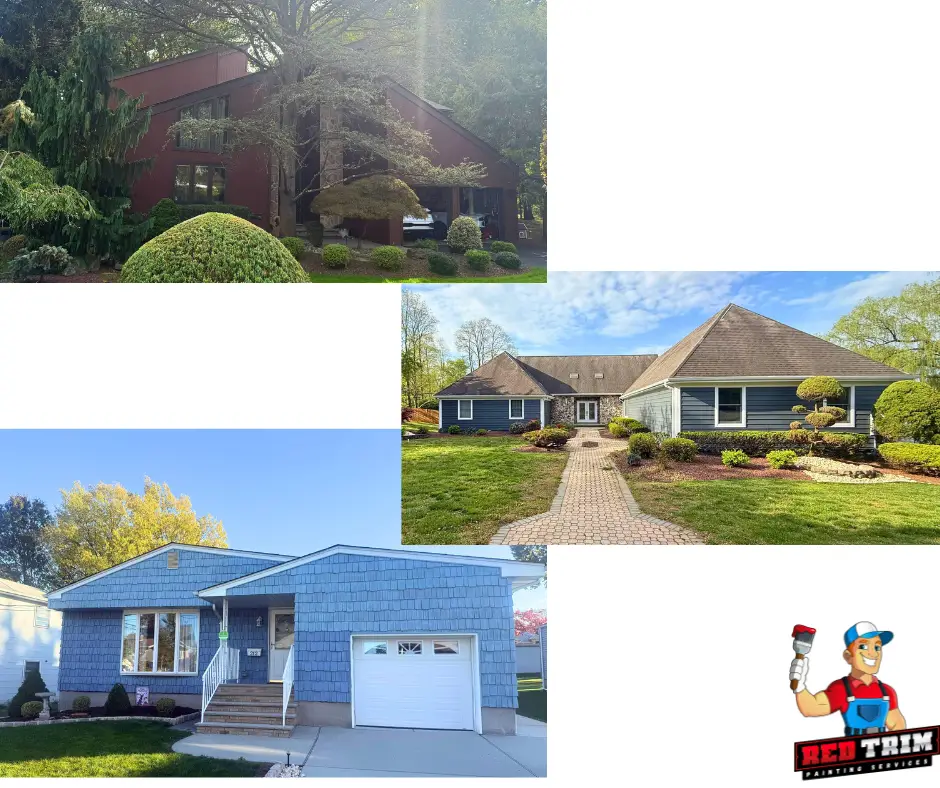
Siding Painting: What NJ Homeowners Need to Know Before Hiring a Contractor
You can buy a five-gallon bucket of paint and a roller and give your siding a go yourself. Some homeowners do exactly that, and most of them eventually call a contractor to fix it. Painting siding on a residential home is a different animal than painting a room. The prep is more involved, the stakes are higher, and the wrong approach shortens the life of both the paint and the siding underneath it. If you’ve decided to hire someone, this guide will help you understand what quality siding painting actually looks like, what separates a solid contractor from one who’ll leave you repainting in two years, and what to expect from start to finish.
What Siding Painting Actually Involves
Siding painting is applying exterior-grade paint to the vertical cladding on the outside of your home. The material your siding is made of changes almost everything: prep process, primer type, paint product, application method, and expected lifespan. Wood siding behaves completely differently from vinyl, which behaves differently from aluminum, fiber cement, stucco, or brick. A contractor who treats every surface the same is cutting corners that will show up within a few years.
A good siding paint job is a surface restoration project as much as a painting project. The paint is only as good as what it’s bonded to. If the surface underneath is chalky, dirty, peeling, or cracked, the new paint fails at those same points, sometimes within a single NJ season.
Pre-1978 Homes: What the EPA Requires
If your home was built before 1978, existing exterior paint layers may contain lead. Federal EPA regulations under the Renovation, Repair, and Painting (RRP) Rule require contractors on pre-1978 homes to be EPA RRP certified, follow specific containment and cleanup procedures, and document compliance. In New Jersey, the Department of Community Affairs enforces these requirements alongside federal rules. Hiring a non-certified contractor on a lead-paint home creates both a health risk and a liability exposure.
Before any quote is finalized on an older home in South Amboy, Perth Amboy, Woodbridge, or anywhere else in Middlesex County with pre-war or mid-century housing stock, ask the contractor directly whether they are EPA RRP certified. A contractor who hands you that documentation without hesitation has done this before.
Surface-by-Surface Breakdown
Each siding material has its own prep requirements, primer needs, and paint compatibility. The sheen level you choose also matters: satin is the standard for most residential siding because it balances moisture resistance and durability while minimizing surface imperfections. Flat finishes are too porous for NJ exterior conditions. Semi-gloss belongs on trim and doors, not siding fields.
Wood Siding
Wood is hygroscopic — it absorbs and releases moisture as humidity changes, swelling and contracting with each cycle. In Middlesex County that cycle repeats constantly, and the paint film has to flex with it. When it can’t, you get cracking and peeling at joints and edges first. This is why wood siding requires a flexible penetrating primer before the topcoat, and why back-priming replacement boards on all four sides before installation matters. Moisture entering through an unprimed back face pushes the front paint off from behind. Most contractors skip back-priming because it takes time. For a deeper look at wood-specific prep and primer systems, see our guide on wood painting for NJ homes.
Fiber Cement Siding
Fiber cement, including James Hardie products, is one of the most common siding materials on NJ homes built or re-sided in the last 20 years. Factory-primed panels have a base coat applied at the plant, but it isn’t a finish coat and wasn’t designed to weather long-term without a topcoat applied within the manufacturer’s window, typically 180 days. Any cut edges, drilled holes, or areas where the factory prime is compromised need field spot-priming before the topcoat. Bare fiber cement absorbs moisture at those points and swells, causing paint failure at every seam and fastener location.
Vinyl Siding
Vinyl is sensitive to heat absorption. Darker colors have a lower solar reflectance index, meaning they absorb more solar radiation and convert it to surface heat. Polyvinyl chloride has a low thermal distortion threshold, so panels painted too dark can soften and warp. The rule: stay at or lighter than the original color’s lightness value. A contractor who doesn’t raise this when you mention a dark color hasn’t painted enough vinyl to know the failure mode. Vinyl may requires a bonding primer formulated for low-porosity surfaces before the topcoat.
Aluminum Siding
Aluminum oxidizes over time through galvanic oxidation, forming an aluminum oxide layer that feels chalky and acts as a release agent under new paint. Power washing removes dirt but not oxidation. Correct prep includes a chemical deoxidizer after washing, followed by a bonding primer for metal substrates. Aluminum also expands and contracts at a different rate than wood or fiber cement, so paint flexibility matters. A rigid paint cracks at panel seams over the first winter.
Stucco
Stucco naturally allows water vapor to move through the wall assembly. A standard film-forming latex paint creates a vapor-impermeable barrier. Moisture that gets behind the paint film, whether from a crack, failed caulk, or vapor drive from inside the wall, builds pressure and eventually causes blistering, delamination, and efflorescence, the white mineral deposits that appear as moisture carries salts to the surface. The correct product for stucco is an elastomeric coating: flexible, crack-bridging, and vapor-permeable enough to let the wall breathe. All cracks and efflorescence must be treated before painting, not covered over.
Brick
Brick needs the right product or you’ll have problems fast. Start with a primer, then use an exterior acrylic masonry coating: one that’s vapor-permeable so moisture doesn’t get trapped behind the film. If the brick shows hairline cracks, elastomeric paint handles that well. It flexes, fills, and holds up under NJ weather. Before any coating goes on, clean with TSP to kill mold and mildew at the surface. Spray with back-rolling is the right application method. As for paint vs. stain: paint forms a layer on top, stain goes into the brick and keeps the texture visible. Either way, this is not a reversible decision. Getting back to natural brick is extremely difficult once it’s coated.
How a Professional Siding Paint Job Works
Inspection and Assessment
A thorough contractor walks the entire exterior before quoting and identifies failing caulk joints, peeling sections, rot, cracked stucco, oxidation on aluminum, and compromised primer on fiber cement. That assessment drives the prep scope, which drives the price. A quote given without a close-up walkthrough is a guess.
Surface Preparation
Prep accounts for most of the labor on a residential siding job. It includes power washing at the correct pressure for each surface type, scraping loose paint, sanding edges, treating oxidation, filling cracks and gaps with appropriate caulk, and spot-priming bare or repaired areas. On older homes with many paint layers, thick-film buildup loses flexibility and cracks as a system. Your contractor should identify and address those areas before the new coat goes on.
Priming
A full prime coat is required on bare wood, deoxidized metal, repaired stucco, cut fiber cement edges, surfaces with staining, and heavily degraded paint. Skipping primer where it’s needed is the most common way contractors reduce their cost on a job. The homeowner pays for it two years later when the paint fails.
Topcoat and Detail Work
Most residential siding gets two coats of quality exterior paint. The best crews combine spray application for efficiency with brush and roll work on textured or irregular surfaces where spray coverage alone isn’t reliable. Trim, soffits, fascia, and window casings are handled separately from the siding field. Walk the full exterior with your contractor at completion before signing off.
Common Mistakes That Cause Early Failure
• Painting over dirt, mildew, oxidation, or chalk. These prevent adhesion and need to be removed first.
• Using the wrong product for the substrate. A standard latex on brick or improperly prepped stucco causes moisture damage well beyond cosmetic failure.
• Ignoring failed caulk at windows, doors, and trim transitions. Water infiltrates at those joints and pushes new paint off from behind.
• One coat on a thirsty surface. Stucco and older wood absorb the first coat heavily. A single coat leaves thin spots and cuts lifespan nearly in half.
• Skipping cut-edge priming on fiber cement. Every unprimed edge absorbs moisture and swells, causing failure at every seam and fastener.
• Not verifying EPA RRP certification on pre-1978 homes. This is a legal requirement, not a suggestion.
NJ Climate and What It Does to Painted Siding
Middlesex County’s climate puts sustained stress on exterior paint. Hot, humid summers affect how paint cures and promote mold growth on north-facing walls that stay damp longer. Winters bring freeze-thaw cycling that drives moisture into cracks and porous surfaces, pushing paint off from the inside. Any caulk or paint film gaps that opened over the previous season become active water infiltration points by the next.
This is why application timing matters. A paint job applied in April before summer humidity sets in cures better than one done in August on hot south-facing siding. Elastomeric coatings deserve a serious conversation on stucco and older masonry: standard paint systems crack under seasonal movement, elastomeric systems flex with it. For wood siding on homes in older neighborhoods like Perth Amboy or South Amboy, and for properties near the Raritan Bay shoreline where salt air accelerates adhesion failure on coated surfaces, thorough prep and premium products are the difference between a job that lasts a decade and one that needs attention in four years.
What Siding Painting Costs in Middlesex County, NJ
Pricing depends on square footage, surface type, existing paint condition, accessibility, and prep scope. Realistic ranges for this market:
• Small home (under 1,500 sq ft living space, approx. 1,000 to 1,400 sq ft of siding): $4,500 to $7,500
• Medium home (1,500 to 2,500 sq ft, approx. 1,400 to 2,200 sq ft of siding): $6,500 to $9,500
• Larger home (2,500+ sq ft): $9,000 to $15,000+
Stucco and masonry run higher because prep is more intensive, elastomeric coatings cost more per gallon, and application is slower. Two-story homes add cost for scaffolding or extension equipment. Significant peeling, rot repair, or lead paint containment work adds cost above these ranges. A quote that comes in well below these numbers is almost always leaving prep out of the scope. For a full breakdown of what drives exterior painting costs on NJ residential homes, see our guide on the cost of exterior painting in NJ.
How Long It Should Last and What to Watch For
A well-prepped siding paint job in NJ should last 7 to 12 years depending on surface type, paint quality, number of coats and exposure. Wood on south-facing elevations or near coastal areas needs attention sooner. Vinyl and aluminum hold up well when painted correctly and can go a full decade before needing another coat. Fiber cement is one of the more durable substrates when the paint system is applied correctly from the start.
Walk the exterior twice a year in spring and fall. Look for caulk that has shrunk or cracked at joints and trim transitions, small areas of peeling or lifting at edges, mold on shaded walls, and any signs of water getting behind the siding. Normal wear is gradual sheen loss and slight color fade over years. Blistering, peeling, or adhesion failure not tied to physical impact is a workmanship warranty conversation. Catching small failures early with caulk and touch-up paint is the cheapest maintenance decision you can make.
What to Verify Before Signing a Contract
• Get at least three quotes. Each should specify prep work, primer plan, paint brand and product name, sheen level, number of coats, and payment schedule.
• Ask what sheen the contractor is specifying and why. Satin for siding, semi-gloss for trim is the right answer.
• Ask about the primer plan specifically: where it will be applied and what product. A contractor who can answer clearly understands the job at a system level.
• Verify NJ HIC registration and insurance. HIC registration is searchable at the NJ Division of Consumer Affairs website.
• For pre-1978 homes, ask to see the EPA RRP certificate before signing anything.
• Don’t pay more than 25 to 30 percent upfront.
Frequently Asked Questions
Can vinyl siding be painted, or should it just be replaced?
Vinyl can be painted and usually makes more financial sense than replacement if the panels are structurally sound. The constraints are choosing a paint formulated for vinyl and staying at or lighter than the original color to avoid heat-related warping. A contractor who doesn’t raise the color restriction hasn’t done enough vinyl painting to know the failure mode.
What’s the difference between painting and staining wood siding?
Paint forms an opaque film and provides stronger moisture protection but peels when it fails. Stain penetrates the wood, shows the grain, wears more gradually, and is easier to maintain but requires more frequent reapplication. For most NJ homeowners with previously painted wood siding, switching to stain means stripping the existing paint film first, which adds significant labor cost.
How do I know if my siding needs replacement rather than paint?
Structurally compromised siding, such as rotted wood boards, cracked or missing stucco, buckled aluminum, warped vinyl, or swollen fiber cement edges, is a candidate for replacement, not painting. A contractor should flag any sections that need replacement during the initial inspection and walk you through what they found before quoting the paint work.
What should a siding paint contractor’s quote include?
Prep process and products, primer type and scope, paint brand and product name, sheen level, number of coats, masking plan for windows and landscaping, payment schedule, and EPA RRP certification status for pre-1978 homes. A lump-sum number with no breakdown makes it impossible to compare bids or hold anyone accountable to a defined scope.
What’s the right sheen for exterior siding?
Satin for most residential siding. It balances moisture resistance, durability, and the ability to minimize surface imperfections. Flat is too porous for NJ exterior conditions. Semi-gloss goes on trim and accent elements, not siding fields. Some fiber cement manufacturers specify satin in their warranty documentation.
How does NJ weather affect scheduling?
Late spring and early fall are the best windows in Middlesex County. Temperatures are moderate, humidity is manageable, and weather is more predictable. Avoid late fall when overnight temperatures consistently drop below 50 degrees. Most exterior paints need sustained warmth through the full curing period, not just at the moment of application.