

Exterior Painting Labor Costs in NJ: What You're Actually Paying For
Exterior Painting Labor Costs in NJ: What You're Actually Paying For
When you get a quote for an exterior paint job, the labor line is usually the biggest number on the page. Most homeowners assume it’s just hours times a rate. It’s not that simple. Labor on a residential exterior covers a range of work that looks very different depending on the condition of your home, the surfaces involved, and how the crew is structured. Understanding what goes into that number helps you evaluate whether a quote is reasonable and why two similar-looking houses can produce labor costs that are thousands of dollars apart.
What Labor Actually Covers on an Exterior Paint Job
The labor charge on a residential exterior painting job covers three distinct phases of work, not just the time a brush or roller is moving.
Prep is the first phase and typically the most labor-intensive. On a house with failing paint, moisture damage, or deteriorated caulk, prep can account for 60 to 70 percent of total labor hours. That includes pressure washing, hand scraping, sanding feathered edges, replacing caulk around windows and doors, filling nail holes and cracks, and priming bare or repaired surfaces. None of that is visible in the finished product, which is why it’s also the phase most likely to be cut short on a low-bid job.
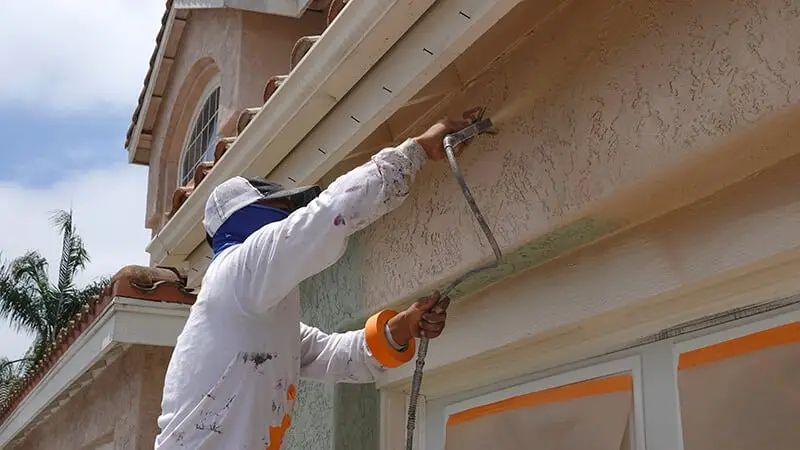
Application is the second phase: primer where needed, first coat of finish paint, second coat of finish paint. The method varies by surface. Trim and detail work gets brush and roller. Siding panels get spray-and-backroll on most jobs, which combines the speed of a sprayer with a roller pass to work the paint into the surface. Each method has a different pace and a different labor cost per square foot.
Cleanup and site management is the third phase. Masking windows, doors, and landscaping before painting starts, moving it all back afterward, and staging ladders and equipment safely. On a two-story home with mature landscaping and a tight driveway, this phase alone can add two to three hours per day.
Labor Rates in NJ: What the Numbers Mean
Exterior painting labor in Middlesex County and the surrounding NJ region runs $55 to $95 per hour per painter. That spread reflects experience level, overhead structure, and how the contractor carries their crew. A solo operator with low overhead can price at the lower end and still do thorough work. A larger company with multiple crews, workers’ compensation, and a full insurance package prices higher because those costs are real and show up in the rate.
Total labor cost is the rate multiplied by the number of painters multiplied by the number of hours. A two-painter crew at $70 per hour working 30 hours runs $4,200 in labor. A three-painter crew at the same rate for the same 30 hours runs $6,300. Crew size affects both cost and timeline. A larger crew finishes faster but costs more per day. A smaller crew costs less per day but stays on your property longer.
What Drives Labor Hours Up
Surface condition
This is the single biggest variable. A house with fifteen years of deferred maintenance, peeling paint on the south elevation, failed caulk on every window, and soft fascia boards takes two to three times as long before a single coat of finish paint goes on. The physical condition of the substrate determines how many hours the crew spends on prep, and prep hours are where most labor cost surprises come from.
Access requirements
Add a second story and the crew needs extension ladders or pump jacks at minimum, scaffolding on more complex jobs. Every time a painter moves a ladder or repositions equipment, that’s time that isn’t painting. On a two-story colonial in Edison with a deck on the back and mature trees along the side yard, access management can add four to six hours to the total labor count compared to a straightforward ranch on a clear lot.
Number of colors
A single body color with one trim color is the most efficient scenario. Every additional color means additional masking, product changes, and time cutting clean lines at transitions. Three-color schemes on homes with detailed millwork can add a full day of labor over a simple two-color job on a comparable house.
Surface complexity
Flat siding panels paint fast. Intricate Victorian millwork, decorative brackets, narrow clapboard, or heavily textured stucco all slow the application rate significantly. The square footage number on a quote doesn’t capture that difference. Labor hours do. A painter covering flat vinyl siding moves at a very different pace than one cutting in around detailed trim on a Perth Amboy Victorian.
When a Job Takes Longer Than Quoted
A crew arrived at a 2,200-square-foot colonial in South Brunswick last summer for what was estimated as a four-day job. On day one, once ladders were up on the second story, they found the fascia boards on the north elevation had been holding moisture for at least two seasons. The wood had softened in three sections and needed replacement before primer could go on. That repair added a full day. The job ran five days instead of four.
Hidden substrate damage on older homes is common in Middlesex County, particularly on north-facing elevations that don’t dry out between rain events. A thorough contractor builds buffer into the estimate and communicates immediately when conditions change. Ask any contractor you’re considering how they handle scope changes when hidden damage turns up mid-job. The answer tells you a lot about how the job will actually run.
What Labor Efficiency Actually Looks Like
An experienced crew works faster than an inexperienced one, but not by cutting prep short. The efficiency comes from sequencing the work correctly. While one painter cuts in trim on the front elevation, another rolls siding on the back. While the first coat dries, the crew handles detail work on windows and doors. Paint has cure times between coats, and a well-run crew doesn’t wait around for them. They move to a different surface and come back. A crew that doesn’t plan the sequence wastes hours every day, which extends the job and costs the homeowner more even at the same hourly rate.
For a full breakdown of what exterior painting costs in Middlesex County including how labor fits into the total project budget, see our cost of exterior painting in NJ guide.
Frequently Asked Questions
How much of an exterior painting quote is labor versus materials?
On a typical residential exterior job in NJ, labor accounts for 70 to 80 percent of the total project cost. Materials, meaning primer, paint, caulk, and sundries, make up the remaining 20 to 30 percent. That ratio shifts toward materials on larger homes using premium products, but labor is almost always the dominant cost.
Why does prep work cost so much in labor hours?
Prep is slow, physical work that can’t be rushed without consequences. Hand scraping failing paint, feathering edges, replacing caulk on every window and door opening, and priming bare surfaces all take time. On a house that hasn’t been painted in ten or more years, prep can take longer than the actual painting. That labor investment is what makes the finish coat last.
Is it cheaper to hire a one-person operation versus a larger crew?
Sometimes on the day rate, but not always on the total job. A solo operator may charge less per hour but take longer to finish, and a longer timeline increases the risk of weather delays. A well-organized crew of two or three finishes faster and keeps the project moving. Compare total project cost, not daily rate.
Can I reduce labor costs by doing my own prep?
In theory, yes. In practice, homeowner prep work often creates more labor for the contractor because it’s done inconsistently or below the standard the crew needs. Ask the contractor specifically what prep tasks they’d be comfortable handing off and what standard the work needs to meet before assuming it saves money.
What should I do if a contractor's labor quote seems unusually low?
Ask what prep work is included and how many hours they’ve estimated for it. A low labor number usually means less prep time, fewer coats, or a crew moving faster than the job warrants. A contractor who can walk you through their hour estimate surface by surface has actually thought through the job. One who can’t is guessing.
Red Trim Painting Services LLC has been painting homes across Middlesex County and surrounding NJ communities for over 10 years. Every quote we write includes a clear breakdown of labor by phase so homeowners understand exactly what they’re paying for and why the hours are what they are.